You just spent thousands of dollars upgrading your floors. Whether you finally pulled the trigger on gorgeous hand-scraped oak, ultra-durable luxury vinyl plank (LVP), or elegant natural stone, the transformation is incredible. It hurts the wallet, but it completely elevates the feel of your home.
But here is the harsh reality: the biggest threat to your expensive new flooring isn’t your golden retriever’s untrimmed claws, and it isn’t the heavy dining chairs sliding back and forth.
It is how you clean it.
For decades, we were all taught the exact same weekend chore ritual. You grab a string mop, fill a heavy plastic bucket with hot soapy water, and slosh it across the room. While this certainly makes the house smell like lemon pine, it introduces the single most destructive element to modern flooring: uncontrolled moisture.
If you want to protect your investment and actually sanitize your home, it is time to rethink the mop.
Why Excess Water Damages Hardwood, Laminate, and Tile
Water and premium flooring are basically mortal enemies. The damage happens slowly, so you might not notice it until it is too late.
If you leave standing water on hardwood, it inevitably sneaks into the microscopic seams between the boards. Over time, this moisture causes the wood to expand, leading to cupping (where the edges of the boards raise up) and severe warping. Fixing this usually requires a full, expensive professional sanding and refinishing.
On laminate flooring, excess water swells the edges, causing them to permanently peak. And if you think tile is immune, think again. Pushing dirty mop water around a tiled room simply forces the muddy residue straight into the porous grout lines. That is exactly why the bright white grout you installed three years ago now looks like a dingy, permanent gray.
The secret to a pristine, undamaged floor is a modern, two-step system that controls moisture with absolute precision.
Step 1: Daily Dust Removal to Prevent Floor Scratches
Before we deal with wet messes, we have to talk about the dry ones. Dust, tracked-in sand, and microscopic grit might not look terrible from a distance, but they act exactly like fine-grit sandpaper. Every single time you walk across a dusty room in your socks, you are physically grinding those abrasive particles into the floor’s protective finish, dulling the shine over time.
You might think sweeping is the answer, but a traditional broom mostly just kicks that fine dust up into the air, only for it to settle right back down on your baseboards an hour later.
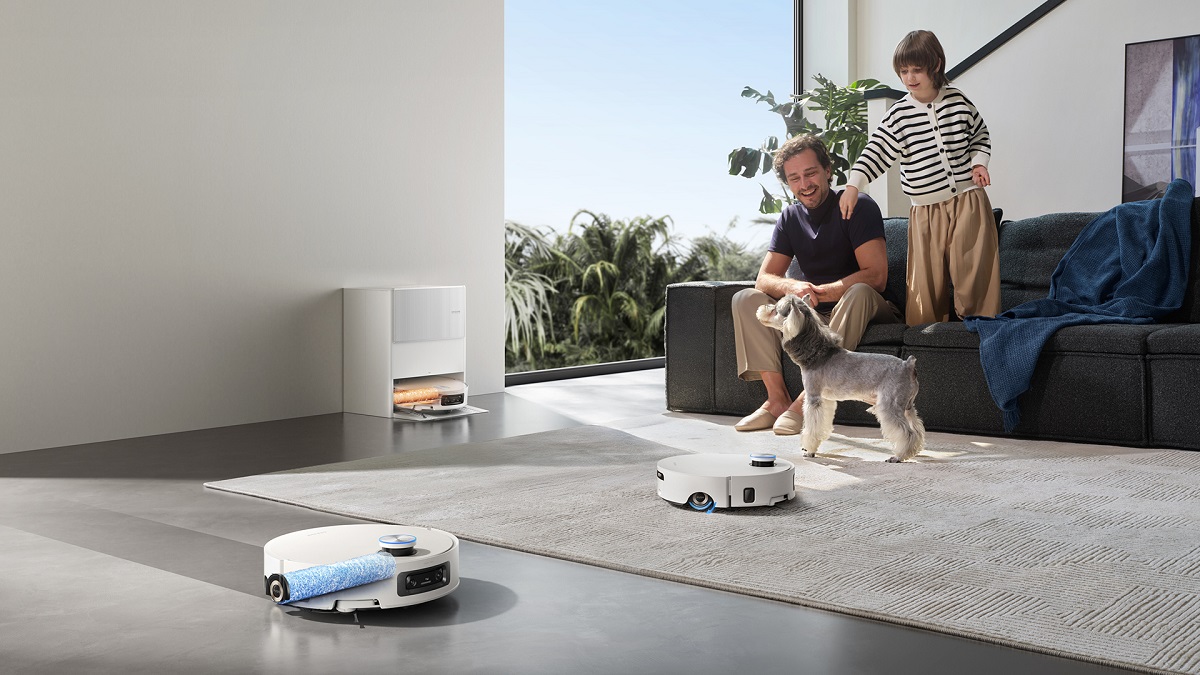
This is where a high-quality vacuum and mop robot becomes an absolute lifesaver. Think of it less as a cleaning tool and more as a daily floor preservation system.
The Automated Advantage:
- Zero Airborne Dust: It sucks up the grit without launching it into the air.
- Precision Moisture Control: Instead of a soaking wet mop, these devices use advanced internal pumps to barely dampen a microfiber pad. It applies just enough water to trap fine dust and gently polish the surface.
- Instant Drying: Because the water application is so minimal, the floor evaporates dry in moments, completely eliminating the risk of wood warping.
Step 2: Replacing the Mop with a Wet Dry Vacuum
Automated devices are incredible for daily maintenance, but life happens. What do you do when a jar of marinara sauce shatters in the kitchen, or the kids track in thick, wet mud after a thunderstorm? A gentle robotic wipe isn’t going to cut it. You need heavy scrubbing torque and serious water volume.
The immediate instinct is to grab a bucket. But let’s think about the actual mechanics of a mop bucket for a second.
After your very first plunge, you are no longer cleaning with fresh water. You are essentially painting a thin, wet layer of dirt and bacteria back onto your expensive floors. Furthermore, it is physically impossible to wring a manual mop out perfectly, which leaves behind those dangerous, floor-ruining puddles.
The safest, most effective upgrade you can make is switching to a dedicated wet and dry vacuum. This completely rewrites the rules of washing floors.
Why It Protects Delicate Floors:
- The Dual-Tank System: It constantly sprays 100% fresh water onto a high-speed scrubbing roller, while simultaneously sucking the dirty, muddy sludge up into a completely separate, sealed tank.
- Flash Drying: Because the vacuum suction is so incredibly powerful, it extracts almost all the liquid instantly. You get the deep-cleaning power of a heavy wash, but the floor is left dry to the touch in seconds.
- No Cross-Contamination: The mess is lifted completely off the floor, not just pushed into the corners.
Floor-by-Floor Care Cheat Sheet
Different materials require different strategies. Here is how to use this two-tier tech system to safely maintain your specific flooring type:
| Flooring Material | The Primary Threat | Your Safe Cleaning Strategy |
| Hardwood & Engineered Wood | Moisture absorption (cupping, warping, separating seams). | Rely 90% on your automated robot for daily dry sweeping and ultra-light damp mopping. Save the manual wet/dry machine strictly for accidental spills or a fast monthly deep clean. |
| Luxury Vinyl Plank (LVP) | Scratches from tracked-in grit; dulling from chemical buildup. | Run the robot daily to keep grit away. Since LVP is waterproof, use the wet/dry machine aggressively in high-traffic zones to easily erase scuffs and sticky messes. |
| Natural Stone & Tile | Discolored, black grout lines filled with dirty mop water. | The wet/dry machine is the star here. The intense suction physically pulls dirty water out of the grout lines rather than letting it settle, restoring the floor’s original brightness. |
The Real Cost of “Cheap” Cleaning
At the end of the day, tearing up and replacing ruined floors is disruptive, incredibly stressful, and financially painful. Maintaining them beautifully shouldn’t be.
When you finally stop relying on an outdated mop and bucket and adopt a modern, moisture-controlled strategy, you are doing a lot more than just checking off a weekend chore. You are actively extending the lifespan of your home’s most expensive finishes.
Your automated unit ensures the abrasive grit never has a chance to settle and scratch the surface. Your high-powered manual machine ensures that deep-cleaning water never stands long enough to cause permanent swelling. Together, they offer a sophisticated level of care that manual tools simply cannot compete with, keeping your home looking brand-new for years to come.